
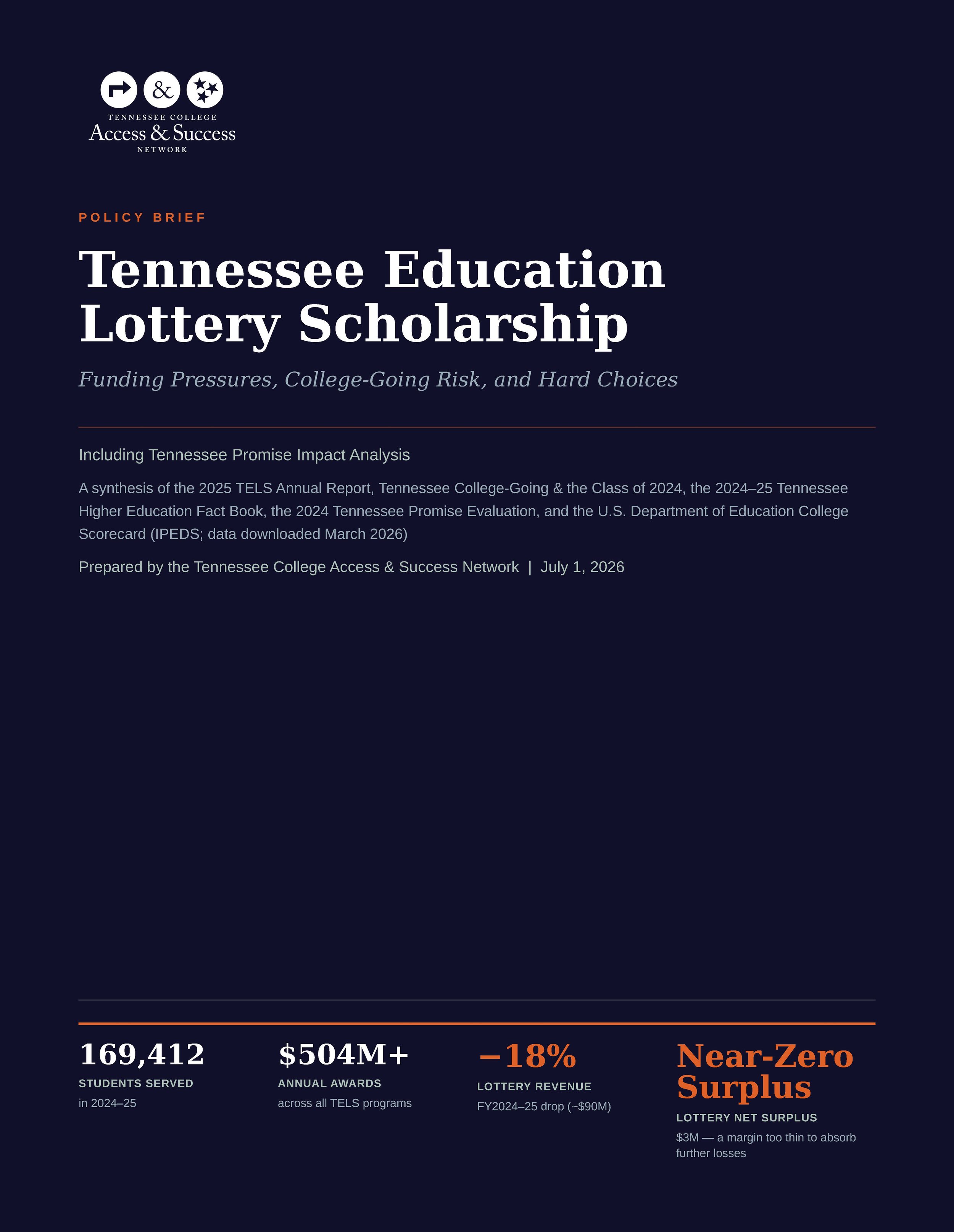
The Tennessee Education Lottery Scholarship (TELS) program faces a structural funding crisis. In fiscal year 2024-25, lottery revenues fell 18% (nearly $90 million) while program expenditures rose 7%. Recent legislation redirected sports wagering revenues away from TELS, eliminating the financial backstop that had been absorbing shortfalls. The net surplus after all lottery expenditures was just $3 million. And current projections confirm the gap will continue.
Today, TCASN released a new policy brief examining what this means for students, institutions, and Tennessee's long-term economic future.
The Program Is Working
TELS serves 169,412 students and distributes more than $504 million in annual awards. 81% of first-year HOPE recipients are retained above pre-pandemic levels. HOPE recipients earn $500 to $1,750 more per quarter than comparable non-recipients six to thirteen years after high school. Dual enrollment participation grew 189% in five years, with 76% of participants going on to college compared to a 56% statewide rate.
Any cuts would fall hardest on the students who already face the steepest barriers. Economically disadvantaged students enroll at a rate 26 percentage points below their peers. The Aspire scholarship is often the deciding factor in whether a low-income student attempts college at all.
Tennessee's Competitive Position Is Also at Stake
Tennessee is projected to see a 15% increase in high school graduates by 2041, the largest growth rate in the nation. But that opportunity only converts to enrollment if the state maintains its affordability advantage. Tennessee's net price already exceeds the national average and sits above three direct border competitors, all of which have programs designed to recruit Tennessee students at lower cost.
"Tennessee has built something real with TELS," said Bob Obrohta, Executive Director of the Tennessee College Access & Success Network. "169,000 students, more than half a billion dollars in awards, and measurable gains in earnings and completion. The question before policymakers is how to maintain the success.”
No Easy Answers
The brief lays out policy options and the tradeoffs each involves. It also identifies a structural proposal that has never been formally analyzed: restructuring HOPE as an income-tiered merit award, which could target savings where they do the least damage to college access.
The brief is available at https://www.tncollegeaccess.org/research-reports